鉄古代 · tetsu-kodai

Intelligent systems built to last.

TetsuKodai is a one-engineer software practice founded by principal engineer Jacob Carpenter — architecture-first systems built to scale and last, with AI doing the heavy lifting.

In practice, that's three kinds of work — Answer Engine Optimization, infrastructure, and agentic AI — delivered directly by the engineer who does it, for teams that can't afford to be slow, broken, or invisible to AI.

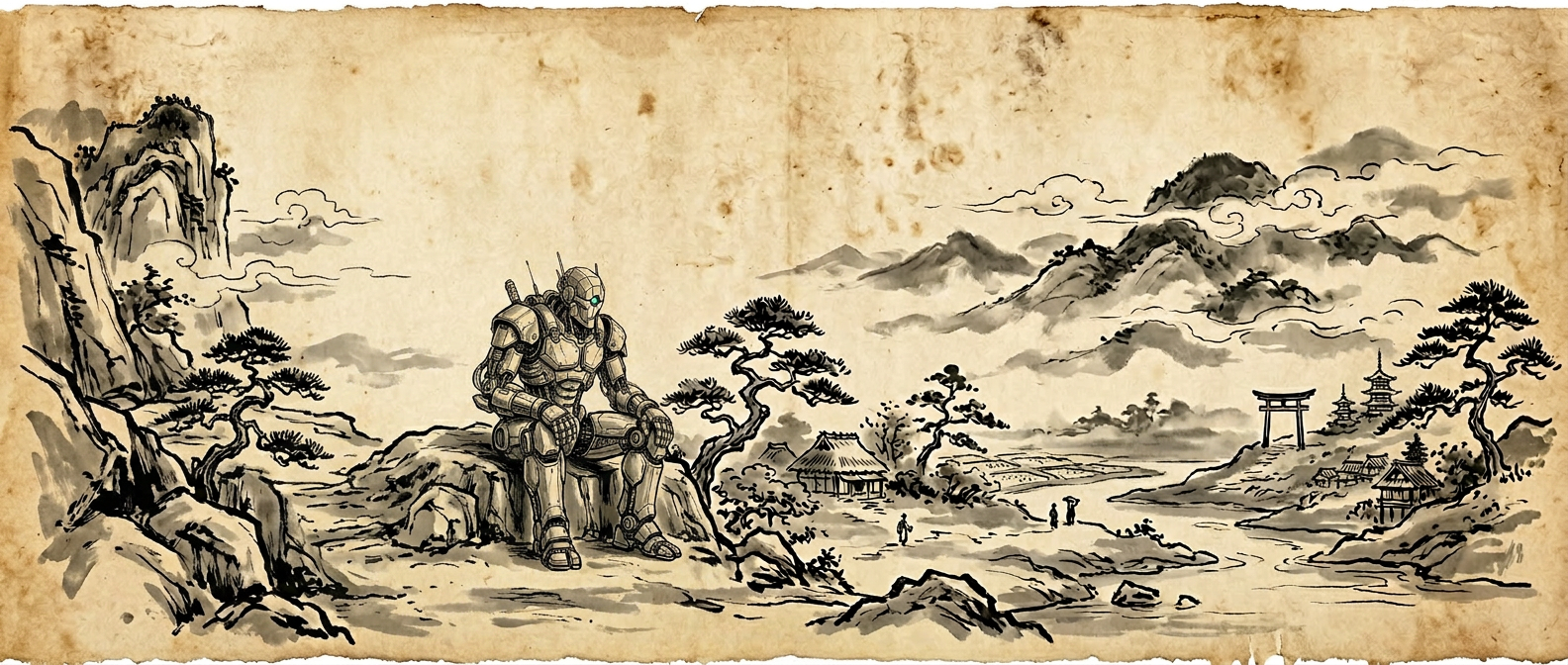
The scroll · emakimonosumi-ink on washi · artist's proof
Sumi-ink scroll painting of TetsuKodai — an ancient metal guardian — on aged washi paper
鉄古代 — the guardian, drawn in the old hand絵巻物
Reading the name

Two characters. One idea.

tetsuてつ
literal · "iron"

Iron, forged into steel.

Not precious metal — structural metal. Iron is just the starting material; forged and tempered, it becomes steel: hard, deliberate, built to take a hit and keep running. The forging is the whole point — raw power disciplined into something you'd trust to hold weight.

古代kodaiこだい
literal · "ancient"

Ancient — as in eternal.

Not ancient as in outdated — ancient as in enduring. Built right the first time, with the discipline to still be standing long after everything around it has been torn down and rebuilt. The kind of old that means eternal, not expired.

+ 古代

Together: intelligent iron, forged into steel.

An intelligence forged the way steel is — tempered, exact, and built to outlast what's around it. Vast capability aimed at your problem instead of the skyline. The name is a promise about what you're hiring, and whose side it's on.

Plainly: TetsuKodai (pronounced TEH-tsoo koh-DYE) is the solo software practice of principal engineer Jacob Carpenter — the name means “ancient forged steel.”

Why this name

Power this size should be on your side.

$ cat ~/the-myth

Modern AI is the first tooling that's genuinely a little frightening to aim at your own systems — fast, vastly capable, and not always legible. The instinct to be wary of it is the correct one.

The name borrows an older image to make sense of that power: an ancient, forged-steel intelligence. A colossal intelligence, forged and tempered over ages — strong enough to be terrifying, disciplined enough to be trusted. The myth that matters here isn't the machine that levels the city. It's the one that decides to guard it.

So TetsuKodai isn't a person's name or a clever acronym. It's that idea, written into the masthead: the full, frightening capability of modern engineering and AI — channelled with discipline, and unmistakably on your side.

Stripped of the metaphor, it's simple: one principal engineer, using AI to do the volume — and staying accountable for the architecture and every line that ships.

Who's behind it

One engineer, doing the actual work.

Portrait of Jacob Carpenter
Founder · Principal Engineer

Jacob Carpenter

Jacob Carpenter. Six years building serverless architectures and distributed systems for startups, out of Phoenix, AZ. When you hire TetsuKodai you get the engineer who does the work and sends the invoice — no account managers, no junior contractors billed at senior rates. The colossus, pointed at your problem.

What I stand for

Four rules I don't break.

01RULE

Architecture before anything.

  • The system is designed to hold a feature before I build it
  • A clean codebase is the foundation, not housekeeping
  • Build on sand and everything you add sinks
02RULE

"Scalable" means the system can breathe.

  • Not "thousands of users" — the system itself can grow
  • New data sources and features, no rewrite required
  • I scale the foundation, not just the traffic
03RULE

No cut corners. Ever.

  • A shortcut moves the bill down the road, never removes it
  • One corner cut today breaks ten features tomorrow
  • Right once beats fast twice
04RULE

AI needs a driver.

  • Claude is wired into everything I do — it handles the volume
  • AI on top of a broken system is just faster mess
  • The architecture and the judgment stay mine

What those rules produce is consistent: architecture-first systems, no cut corners, and AI kept on a leash — shipped as working, merged code, not a slide deck.

How the work gets built

Intent is the source.

$ cat ~/methodology

Those rules only hold if the build process enforces them — so I don't freehand it. I work spec-first, through a framework I built and open-sourced: AIDE — Autonomous Intent-Driven Engineering.

A short intent spec becomes the contract every agent works from. The architecture is decided up front and written down; the AI executes against it instead of improvising. That's how a system stays coherent while AI does the heavy lifting — the foundation is fixed before the first line of code, and every change traces back to a stated intent.

It's the discipline behind “no cut corners,” made automatic: the spec is the source of truth, the agents are the crew, and nothing ships that drifts from what you actually asked for.

Original research

I don't pitch AEO. I measured it.

55%
of 4,688 service-business sites aren't clearly visible to ChatGPT, Perplexity, or AI Overviews.
14×
the organic traffic the AI-visible sites pull — a gap that holds in every industry tested.
TetsuKod.ai 2026 audit · 63-metric AEO scorecard · every claim ships with the study behind itRead the study
Behind the numbers

I built the engine that runs the studies.

$ cat ~/how-i-know

That 55% isn't a number I lifted from someone else's report. It comes from a scoring engine I built, with Claude subagents running the entire analysis pipeline — they audit thousands of sites against signal lenses, then run real statistics on the results: effect sizes, cohort comparisons, per-industry and per-state breakdowns.

And it keeps a ledger of what didn't work. When a hypothesis comes back null or underpowered, that's recorded too — so the numbers I cite are the ones that survived scrutiny, not the ones that made a tidy headline.

scoring-engine — studies
● running
$ study run --family aeo→ claude subagents · audit · score · analyze · ledger WIN aeo-server-rendered-metadata δ +0.296 · n 2,834WIN aeo-content-surface δ +0.383 · n 3,885NULL aeo-indexability-crawl ledgeredUNDER aeo-page-comprehension ledgered # winners ship. nulls stay on the record.
$ ./aeo --learn-more

Want to learn more?

Most of this discipline points at one question: can answer engines actually see your site? That’s AEO — the fastest-shifting corner of search. Here’s what it is, why it matters, and where you currently stand.