

 Why Your Website Should Join the FediverseThe web is shifting away from centralized platforms and toward open, federated communication. By integrating your website with the Fediverse, your content becomes part of a decentralized distribution network powered by open protocols like ActivityPub. Instead of relying on closed algorithms for visibility, your site becomes the canonical source — distributing posts across interoperable platforms while maintaining full ownership, control, and long-term resilience.2/19/2026Read more →
Why Your Website Should Join the Fediverse
The web is shifting away from centralized platforms and toward open, federated communication. By integrating your website with the Fediverse, your content becomes part of a decentralized distribution network powered by open protocols like ActivityPub. Instead of relying on closed algorithms for visibility, your site becomes the canonical source — distributing posts across interoperable platforms while maintaining full ownership, control, and long-term resilience.
2/19/2026Read more →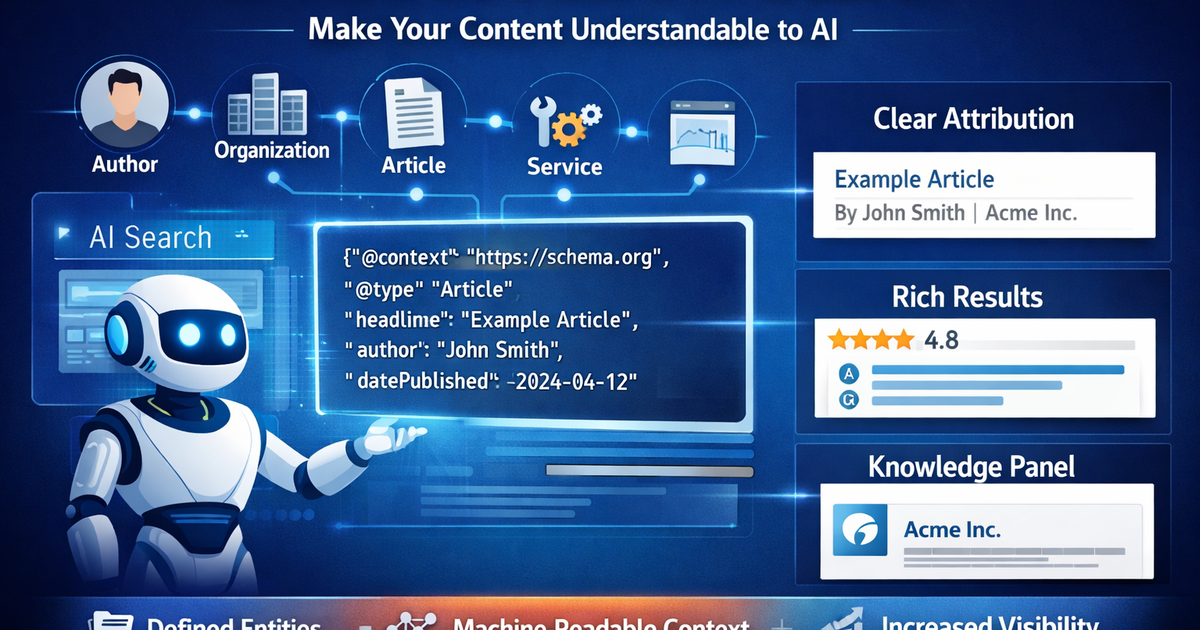 Structured Data in the Age of AI Search: Why It’s No Longer OptionalSearch is no longer just about ranking for keywords — it’s about being understood by AI systems that summarize, compare, and recommend content directly inside generative interfaces. In this environment, structured data is essential. By explicitly defining entities like your organization, authors, articles, and services using Schema.org markup, you remove ambiguity and give AI-driven search engines machine-readable context. That clarity increases your chances of proper attribution, rich results eligibility, and visibility inside AI-generated answers.2/19/2026Read more →
Structured Data in the Age of AI Search: Why It’s No Longer Optional
Search is no longer just about ranking for keywords — it’s about being understood by AI systems that summarize, compare, and recommend content directly inside generative interfaces. In this environment, structured data is essential. By explicitly defining entities like your organization, authors, articles, and services using Schema.org markup, you remove ambiguity and give AI-driven search engines machine-readable context. That clarity increases your chances of proper attribution, rich results eligibility, and visibility inside AI-generated answers.
2/19/2026Read more →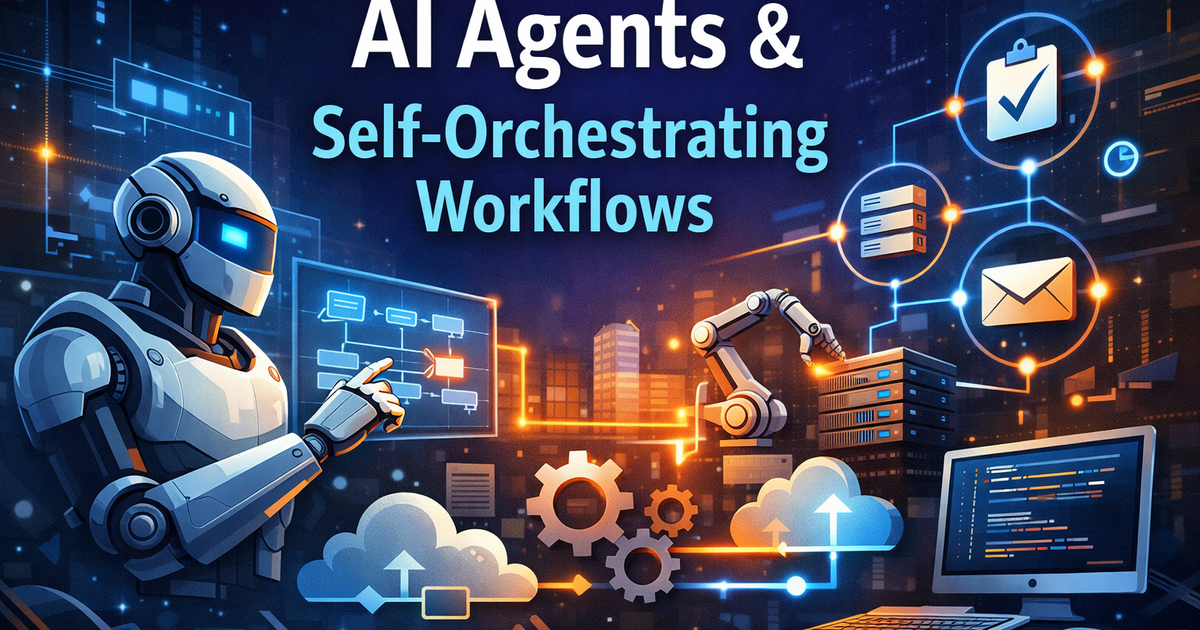 AI Agents and Self-Orchestrating Workflows in Production SystemsModern AI is moving beyond chat interfaces and into autonomous execution. Agentic systems represent the next evolution: software agents that reason, select tools, and orchestrate multi-step workflows dynamically — without rigid, pre-defined paths. Unlike traditional automation scripts, these systems adapt in real time, spawning parallel tasks, retrying intelligently, and escalating when confidence drops. In this article, we break down how AI agents work, how self-orchestrating workflows differ from static pipelines, and what it takes to implement them safely and reliably in production.2/19/2026Read more →
AI Agents and Self-Orchestrating Workflows in Production Systems
Modern AI is moving beyond chat interfaces and into autonomous execution. Agentic systems represent the next evolution: software agents that reason, select tools, and orchestrate multi-step workflows dynamically — without rigid, pre-defined paths. Unlike traditional automation scripts, these systems adapt in real time, spawning parallel tasks, retrying intelligently, and escalating when confidence drops. In this article, we break down how AI agents work, how self-orchestrating workflows differ from static pipelines, and what it takes to implement them safely and reliably in production.
2/19/2026Read more →